If you're curious about how much your vinyl collection is worth, there are a few ways to find out. You can take your records to a local music store and see if they're interested in buying them, or you can search online for a vinyl record appraisal service. Another option is to sell them on eBay or another online auction site.
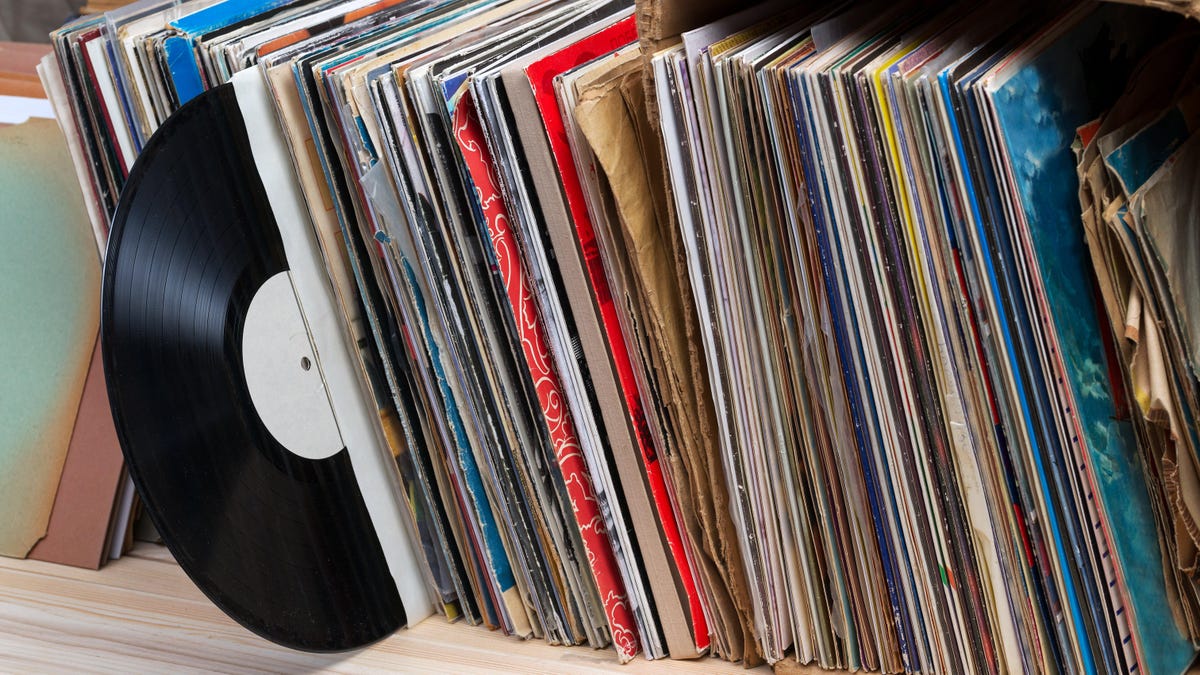
Despite the best efforts of killjoys and technophiles, vinyl records have refused to die. Every time a new audio technology hit the market, predictions of the Death of Vinyl would follow—and when Compact Discs arrived 40 years ago, it seemed like that death had finally come. Who wouldn’t want perfect digital clarity over the fussy, pop-and-hiss-prone sound of vinyl?
As it turns out, plenty of people buy vinyl albums. In 2021, record sales of vinyl albums reached 41.7 million, making it the best-selling physical music format. This isn't just a trend among curmudgeonly middle-aged music fans—Gen Zers and millennials are also avid vinyl album buyers. The evergreen popularity of vinyl albums means that many people have amassed large record collections, some of which are worth a lot of money.
If you're sitting in a home with vinyl albums, you might wonder if you're also sitting on a goldmine. If you could commit to streaming and sell off your records, you might be able to retire. The answer is: maybe? Vinyl records can be very valuable—a few years ago Ringo Starr sold off his personal copy of The Beatles—otherwise known as The White Album—for a whopping $790,000. Most records won't be that valuable, but your record collection certainly might be worth something. Here's how you can figure out if you're going to retire on all that vinyl.
What are valuable vinyl records?
It’s worth noting that the record-setting money Starr got for The Beatles comes with a few caveats. First of all, the provenance: This was the personal copy of Starr, the man who literally helped make the record. He reportedly kept it in a safe for decades, so it was in pristine condition. And it was stamped with the catalog number 0000001, meaning it was the first copy printed. So unless you’ve got some records in your collection that have those kinds of bona fides, chances are your records are worth a lot less.
The most valuable vinyl records are generally rock and roll, blues, soul, jazz, and country, in descending order. So your obscure filk records from the 1960s may not have more than curio value. As a reality check, keep in mind that the average sale price of old vinyl records on eBay, for example, is just $15.
the presence of a label, the condition of the vinyl, and the condition of the cover. Assuming the genre of the record is one of those listed above and is in good condition, there are a few things to look for: the presence of a label, the condition of the vinyl, and the condition of the cover.
A record that is autographed is more valuable because there are two markets for it: both record collectors and autograph hounds. There needs to be a certificate of authentication, however, or no one will buy it.
The harder it is to find a copy of that record, the more valuable it is to collectors. Have a copy of Frank Wilson’s “Do I Love You” on 45 (of which only six pressings were ever made, and only two are known to have survived, and only one is in playable)? You might get $100,000 for it. Records that were withdrawn from the market, had their cover art changed, or represent oddball special editions are generally more valuable.
If a vinyl record is already valuable, having it still sealed in the original plastic will also increase its value. In the world of collecting, things aren't meant to actually be enjoyed, apparently.
If you're a normal person who actually played their records, you might still have some money sitting in that coat closet you converted into a vinyl library. Here's how to figure it out.
There are a few ways to figure out how much your vinyl records are worth. One way is to look on eBay to see what similar records are selling for. Another way is to look on online auction sites to see what people are asking for the records.
The easiest and most reliable way to assess the value of your records is to ask an appraiser. You can find a professional appraiser through the Appraisers Association of America or the American Society of Appraisers. A formal appraisal for insurance purposes will be expensive and thorough, but you can also ask an appraiser for a fair market value estimate, which is less “official” but gives you a decent idea of how much your records might be worth.
If you don't want to go through that trouble and expense, you can estimate the value of your vinyl yourself. It's a bit of work, but if you hit gold, it could be worth it. Here's how to do it:
Look at your records. It might seem obvious, but find a space with good light and look at your records individually. Note the general condition—there’s a standard way to determine this called the Goldmine Standard, which you should follow, categorizing your records into Mint, Near-Mint, Very Good Plus, Very Good, Good Plus, Good, Fair, or Poor. Keep in mind that even records in Good condition are only worth about 15 percent of what a Mint version would be worth, and Fair or Poor records are pretty much worth nothing.
Note the release info. Vinyl records have release and catalog info stamped on them, and this is important information. The famous example here is Dark Side of the Moon by Pink Floyd, which spent a record 917 weeks on the Billboard charts. The album has had nearly 400 vinyl pressings over the years. The more recent the pressing, the more valuable it is.
Record collectors have been hoarding their precious records for decades now, so it should be no surprise that there are online databases providing a decent guide to how much a particular vinyl record is worth. Discogs and Popsike are good places to start, and eBay sells enough vinyl records secondhand to offer a decent glimpse of the market value. These valuations aren’t perfect, but they can give you a ballpark figure.
If you have vinyl records from the 1950s, 60s, and 70s, you have a goldmine. Johnny Ray 45s from your parents or ancient blues 78s from the 1920s can go for a lot of money, so don't discount them.
Comments
Post a Comment