Reuters recently reported on the importance of modernized technology in court proceedings. The article discusses how technology has changed the way that court proceedings are conducted and how it has impacted the overall outcome of cases.
Counsel relies on technology to electronically file and serve documents and obtain court records before entering the courtroom. Once inside the courtroom, counsel, judges, and court staff rely on the court's technology when attending and participating in proceedings, such as hearings, trials, conferences, and other events, that are increasingly held remotely. Counsel must also leverage the court's infrastructure - such as document storage and transfer - to use exhibits and other materials during a proceeding.
I moderated a bar association panel on how best to use technology in state court proceedings. The panel discussed several key considerations that merit further exploration.
The court's systems for electronic filing and case record management are compatible.
Electronic filing is convenient but can create uncertainty until you can identify if the court accepted it. There is a risk of a technical issue with your submission, so you need to be able to determine quickly if the court accepted it. If not, you may need to refile. Any delay in making this determination can create a risk of missing a filing deadline.
Judges must also be able to access electronically filed documents directly. Absent this access, judges run the risk of overlooking a key document or exhibit filed by counsel.
A court should use a single case management and electronic filing system; or, if that is unavailable, courts should integrate their existing electronic filing and court records systems. Otherwise, the risks of an error exist, and counsel may opt to file in paper format (unless mandatory) to minimize potential filing issues.
Yes, counsel can submit materials in any format.
Court electronic filing systems typically require that counsel use PDF format to electronically file materials. However, if the material involved is too large or in an incompatible format, then the material cannot be filed electronically. For example, electronic filing systems often do not accept photographs, emails, text messages, and audio or video recordings in original format.
Counsel must determine in advance the best way and timing for electronically submitting materials to ensure proper consideration by the court. This requires counsel to inquire whether they can file materials using a thumb drive, CD, shared cloud drive, or other means. Counsel must also determine whether the court has compatible software or applications to access materials using counsel’s preferred file format and, if appropriate, to copy and edit materials. In turn, courts should have the latest software and applications to review, access, and use electronic submissions.
When a document is electronically submitted, is it accessible to everyone who needs it?
Counsel must understand what happens to documents and other materials after filing them with the court. For example, counsel should understand the court’s capabilities for whether documents retain color features after electronic filing and if the court can print any or all copies in color. If counsel electronically file lengthy documents or multiple related documents, counsel should understand how the documents appear to the court (such as linking related documents and numbering pages).
Counsel often lacks the ability to preview documents, using a court’s electronic filing system, and see how their submissions will appear to the judge and court staff. To minimize these issues, counsel may need to provide courtesy copies of filed materials where color is relevant and mark page numbers of exhibits and other associated materials to ensure that a filing is complete and reviewable as intended.
Do courthouse facilities limit the ability of lawyers to present their case in a courtroom proceeding?
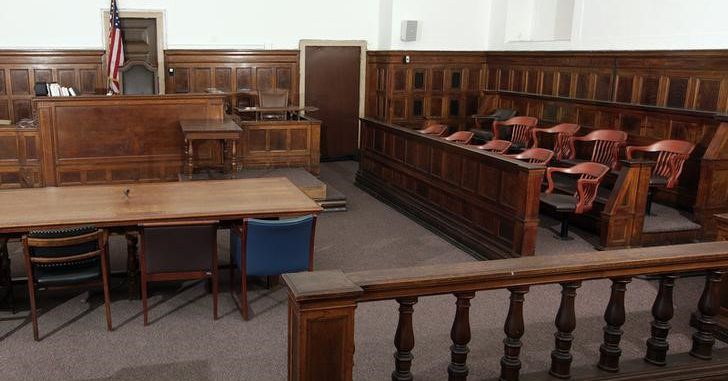
Counsel should survey the courtroom in advance to determine the available technology features. This is particularly important before trial, where counsel often must use exhibits and other materials to convince a judge or jury. Even as courts adapt to use electronic methods, their physical facilities can lag. Courtrooms do not always have sufficient existing equipment or capabilities, such as ample or nearby electrical outlets, display monitors, computer cables, or wireless internet access. The construction or location of some courtrooms may interfere with a cell phone signal to contact others or access the internet.
Counsel must understand how to address any shortcomings and develop a backup plan. For example, counsel must bring necessary equipment, such as power strips, cables, or a mobile hotspot. Counsel should also account for using traditional ways to present evidence, such as a whiteboard or using oversized paper versions of exhibits, especially if internet access is unavailable or unreliable or the courtroom lacks monitors.
Yes, the court can conduct a complex proceeding remotely.
Many courts adapted to the pandemic by using videoconferencing to conduct a fully or partially remote proceeding. While a court may use a videoconferencing platform, this requires reliance on the court’s existing infrastructure, which can present challenges.
Counsel must determine in advance whether the court’s technology places them at a disadvantage with a complex remote proceeding, such as a trial. For example, the court’s videoconferencing platform may need to accommodate multiple participants (such as parties and witnesses), display sophisticated exhibits (such as high-resolution documents, videos, or simulations), and provide or sync to a means for recording the proceeding. This also may require the court, as a host, to have enough bandwidth to hold the proceeding and place sufficient cameras and audio equipment inside the courtroom to avoid putting any remote participants at a disadvantage. Otherwise, counsel may need to have any complex proceeding held in person.
Opinions expressed are those of the author. They do not reflect the views of Reuters News, which, under the Trust Principles, is committed to integrity, independence, and freedom from bias. Thomson Reuters Institute is an independent research center owned by Thomson Reuters.
Brandon Moss joined Practical Law from Murphy, Hesse, Toomey & Lehane, LLP, where he was a partner. His practice focused on civil litigation, appellate practice, employment law, and public law.
Comments
Post a Comment